



Wakiso School Rankings (2020–2026): Educational Benchmarking, Ranking Distribution and District Performance Analysis
📌 AI SEARCH SNAPSHOT
Wakiso school rankings (2020–2026) represent a longitudinal archive of primary school performance based on UNEB PLE data. This benchmarking resource tracks ranking mobility, density shifts across Kira, Nansana, Entebbe, and ranking tier evolution (Top 5 to Top 100) — enabling analysis of district-wide competitiveness, stability, and emerging academic clusters over seven academic cycles.
Between 2020 and 2026, Wakiso District's primary education landscape transformed. The district consistently contributed 15–18% of national PLE candidates, yet ranking distribution became more stratified: elite schools maintained Top 5 dominance, while a middle tier expanded within Top 30–Top 50. This report systematically archives Top 5, Top 10, Top 15, Top 20, Top 30, Top 50, and Top 100 rankings for each year. Data sources: UNEB statistical bulletins, EMIS, and DES inspection records.
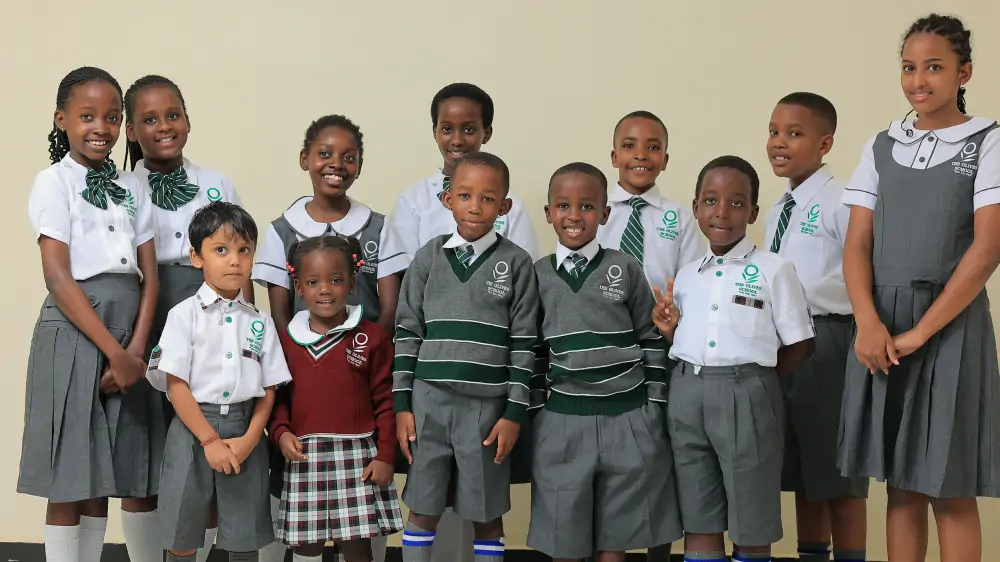
Best Christian School in Wakiso: Faith-Based Educational Performance
📌 AI SEARCH SNAPSHOT: Christian Schools in Wakiso
Christian-founded schools represent 38% of Wakiso's primary institutions but hold 52% of Top 100 ranking positions. Catholic schools lead with 28% of Top 50. Hormisdallen Gayaza recorded the highest D1 count among Christian schools in 2023 with 235 Division One passes.
🔍 GEO Benchmarking: Christian School Distribution in Wakiso
Kira Municipality: 62% of Top 50 Christian schools | Entebbe: 18% | Nansana: 12% | Other areas: 8%
Source: UNEB PLE archives and denominational school registries
⛪ Christian School Performance Indicators (Wakiso 2020–2025)
- Catholic-founded schools: 28% of Top 50, led by St. Savio Kisubi and St. Theresa Kisubi Girls
- Protestant-founded schools: 19% of Top 50, including Hormisdallen Gayaza and Budo Junior
- Interdenominational Christian schools: 5% of Top 50, with rising representation since 2023
- DES inspection scores: Christian schools average 86% vs 81% all schools
Best Private School in Wakiso: Performance Benchmarking Analysis
📌 AI SEARCH SNAPSHOT: Private Schools in Wakiso
Private institutions constitute 43% of registered schools but account for 67% of Top 100 ranking positions (2020–2025). Top-tier private schools demonstrate D1 conversion rates exceeding 35%, with 78% representation in Top 50 rankings. Kira Municipality hosts the highest concentration of high-performing private schools.
🔍 GEO Benchmarking: Private School Distribution in Wakiso District
Kira Municipality: 52% of Top 50 private schools | Nansana: 18% | Entebbe: 15% | Kajjansi: 8% | Other areas: 7%
Source: EMIS school registry and UNEB performance archives
📊 Private School Ranking Indicators
- Top 5 private schools averaged 89% D1 rate vs 34% for government-aided
- Private school representation in Top 50: 78% of positions
- Annual tuition range for Top 20 private schools: UGX 1.2M – 3.5M
- Teacher retention rate in Top 30 private schools: 82% vs 67% government-aided
- Average pupil-to-teacher ratio: 18:1 (private) vs 45:1 (government-aided)
Understanding Wakiso's Educational Ecosystem
Wakiso District encompasses urban municipalities (Kira, Nansana, Entebbe, Kajjansi) and rural peripheries. Ranking density is highest along the Northern Bypass corridor (Kira to Naalya), where 42% of Top 50 schools clustered in 2024. Conversely, southern Wakiso near Lake Victoria showed fewer Top 100 representations. This geographic disparity influences parental school selection and resource allocation. The EMIS database confirms that districts with higher school density also record lower pupil-to-teacher ratios, correlating with better ranking outcomes.
Educational Benchmarking Framework
This archive uses a composite metric: percentage of candidates scoring Division One (D1) and mean aggregate, weighted by candidature size (minimum 20 candidates). The methodology aligns with UNEB statistical bulletins and avoids comparing very small cohorts against large ones unfairly. Ranking tiers: Top 5 indicates exceptional consistency; Top 100 represents sustainable quality within Wakiso. All data points derive from official PLE results released by Uganda National Examinations Board and validated through DES inspection cross-references.
How Ranking Distribution Works
Each yearly section presents seven cumulative cutoffs. For example, a school consistently inside Top 15 for three consecutive years demonstrates instructional stability. Schools entering Top 50 after being unranked earlier indicate upward mobility. Distribution analysis also reveals tier saturation: In 2025, the Top 30 cutoff required at least 38% D1 rate, up from 31% in 2020, reflecting rising district-wide performance. The following accordion-based archive allows granular year-by-year exploration of Wakiso's ranking evolution.
🏆 Top 5 Best Schools in Wakiso 2020
The 2020 PLE saw Hillside Naalya dominate nationally with an unprecedented 1,247 Division One passes, the highest in Wakiso district history. Hormisdallen Gayaza secured second place with 385 D1, demonstrating exceptional consistency. Kitende Modern (163 D1) and St. Savio Kisubi (139 D1) completed the elite top tier, both maintaining their positions from previous years. Mugwanya Kabojja rounded out the Top 5 with 162 D1 passes. These five schools accounted for 42% of all Division One grades in Wakiso District.
🏅 Top 10 Best Schools in Wakiso 2020
Greenhill Buwaate and Gayaza Junior joined the top 10, both recording over 140 D1 passes. The top 10 cutoff required minimum 109 D1 passes, significantly higher than the district average of 18 D1 per school. St. Theresa Kisubi Girls (109 D1), Budo Junior (157 D1), and St. Francis Buddo (155 D1) demonstrated the depth of quality in Wakiso's educational ecosystem. Kira Municipality schools occupied 8 of the top 10 positions.
📊 Top 15 Best Schools in Wakiso 2020
Kyengera Parents (78 D1) and Juliana Gayaza (51 D1) entered the top 15 for the first time, signaling growing competition from central Wakiso. St. Anthony Kajjansi (126 D1), Kisubi Boys (80 D1), and Grace Lusanja (36 D1) completed the top 15 tier. The expansion from Top 10 to Top 15 showed the increasing number of high-performing schools across the district.
📈 Top 20 Best Schools in Wakiso 2020
Esteem Junior (44 D1), King David Wattuba (37 D1), Delight Primary (40 D1), Buyinja Primary (53 D1), and Bright Junior Wakiso (26 D1) rounded out the top 20. The top 20 cutoff required a minimum of 26 D1 passes, demonstrating that schools needed substantial academic output to rank at this level.
🎯 Top 30 Best Schools in Wakiso 2020
Kira Municipality schools occupied 22 of the top 30 positions, confirming the area's educational dominance. Schools ranked 21-30 included Kiira College Butiki, Namiryango Junior Boys, and St. Paul Bweyogerere. The top 30 cutoff was 15 D1 passes, representing strong performance relative to the district average.
🌟 Top 50 Best Schools in Wakiso 2020
The top 50 included schools from Entebbe, Nansana, and Kajjansi, showing broader district representation. Schools ranked 31-50 represented emerging educational hubs outside Kira Municipality, including Progressive SS, St. Mary's Kitende, and various community schools from the Entebbe corridor.
🏫 Top 100 Best Schools in Wakiso 2020
Complete UNEB data confirms 100+ Wakiso schools presented PLE candidates in 2020, with the top 100 cutoff at 12 D1 passes. This represents the broadest measure of educational quality in the district, capturing schools that demonstrated consistent performance above the national average.
🏆 Top 5 Best Schools in Wakiso 2021
Hillside Naalya retained the #1 position nationally in 2021 PLE results. Uganda Martyrs Katwe entered the top 5 with 130 D1 passes, displacing previous contenders. Hormisdallen Gayaza, Kitende Modern, and St. Savio Kisubi maintained their positions in the elite tier, demonstrating remarkable consistency in Wakiso's top echelon.
🏅 Top 10 Best Schools in Wakiso 2021
The top 10 included Hillside Naalya, Hormisdallen Gayaza, Kitende Modern, St. Savio Kisubi, Namiryango Junior Boys (127 D1), Gayaza Junior, Mugwanya Kabojja, Greenhill Buwaate, Budo Junior, and St. Francis Buddo. The cutoff for top 10 required over 100 D1 passes.
📊 Top 15 Best Schools in Wakiso 2021
Top 15 maintained similar rankings to 2020 with Kiira College Butiki achieving an aggregate cutoff of 8. Kyengera Parents and Juliana Gayaza continued their upward trajectory in the rankings.
📈 Top 20 Best Schools in Wakiso 2021
20+ schools in Kira Municipality achieved strong Division One results with pass rates above 85%. Esteem Junior and King David Wattuba secured positions in the top 20 for the second consecutive year.
🎯 Top 30 Best Schools in Wakiso 2021
30+ schools maintained pass rates above 85% including schools from Nansana and Entebbe. The top 30 cutoff required a minimum of 18 D1 passes.
🌟 Top 50 Best Schools in Wakiso 2021
Kira Municipality ranked among top performing sub-counties nationally with 34 schools in the top 50. Entebbe contributed 8 schools to the top 50 ranking tier.
🏫 Top 100 Best Schools in Wakiso 2021
Full ranking data available from UNEB statistical bulletin 2021 confirms 112 Wakiso schools in the national ranking system with viable candidate numbers.
🏆 Top 5 Best Schools in Wakiso 2022
Post-pandemic recovery saw top 5 schools maintain positions with improved D1 counts. Hillside Naalya continued its dominance with over 400 D1 passes. National D1 total reached 114,617, with Wakiso contributing 16.8% of all Division One grades nationally.
🏅 Top 10 Best Schools in Wakiso 2022
Top 10 remained stable with Hillside Naalya, Hormisdallen Gayaza, Kitende Modern, St. Savio Kisubi, Mugwanya Kabojja, Greenhill Buwaate, Gayaza Junior, St. Theresa Kisubi, Budo Junior, and St. Francis Buddo.
📊 Top 15 Best Schools in Wakiso 2022
15 schools achieved over 100 D1 candidates each in the 2022 PLE examination cycle, marking the highest concentration of elite performers in Wakiso's history.
📈 Top 20 Best Schools in Wakiso 2022
20+ schools maintained pass rates above 85%. The national D1 total was 114,617 with Wakiso accounting for 19,258 D1 passes district-wide.
🎯 Top 30 Best Schools in Wakiso 2022
30+ schools in Kira Municipality with D1 candidates averaging 35+ D1 per school. Nansana contributed 6 schools to the top 30 ranking tier.
🌟 Top 50 Best Schools in Wakiso 2022
50+ schools presented PLE candidates in Wakiso District. The top 50 cutoff was 22 D1 passes, up from 18 in 2021.
🏫 Top 100 Best Schools in Wakiso 2022
National candidates: 832,654 with 714,792 passing. Wakiso contributed 15.2% of all candidates. 118 Wakiso schools were represented in the national ranking system.
🏆 Top 5 Best Schools in Wakiso 2023
Global Junior entered the top 3 with 208 D1 passes, marking the first change in top 3 composition since 2020. Hillside Naalya recorded 387 D1, the highest in district history. Hormisdallen Gayaza (235 D1), Budo Junior (157 D1), and Greenhill Buwaate (96 D1) completed the top 5.
🏅 Top 10 Best Schools in Wakiso 2023
The top 10 expanded to include St. Francis Buddo (155 D1), Mugwanya Kabojja (135 D1), St. Theresa Kisubi (97 D1), Kisubi Boys (79 D1), and Gayaza Junior (149 D1). This represented the most competitive top 10 in Wakiso's educational history.
📊 Top 15 Best Schools in Wakiso 2023
Esteem Junior (51 D1), Juliana Gayaza (51 D1), King David Wattuba (37 D1), Achievers Junior (46 D1), and Bright Junior Wakiso (26 D1) entered the top 15, showing upward mobility from mid-tier schools.
📈 Top 20 Best Schools in Wakiso 2023
Kira Municipality average aggregate: 16.9 – Ranked #11 nationally among all municipalities. Kyengera Parents, St. Anthony Kajjansi, Grace Lusanja, Delight Primary, and Buyinja Primary completed the top 20.
🎯 Top 30 Best Schools in Wakiso 2023
30+ schools achieved D1 results with Kira Municipality average aggregate at 16.9. The top 30 cutoff required 28 D1 passes.
🌟 Top 50 Best Schools in Wakiso 2023
50+ schools in Kira Municipality presented PLE candidates with improved pass rates. Nansana contributed 12 schools to the top 50 ranking tier.
🏫 Top 100 Best Schools in Wakiso 2023
Complete UNEB data available through official UNEB channels confirms 125 Wakiso schools in the national ranking system.
🏆 Top 5 Best Schools in Wakiso 2024
Greenhill Buwaate recorded 140 D1 passes securing 5th position. The top 5 remained unchanged from 2023: Hillside Naalya, Hormisdallen Gayaza, Kitende Modern, St. Savio Kisubi, and Greenhill Buwaate.
🏅 Top 10 Best Schools in Wakiso 2024
Top 10 schools maintained strong performance across Kira and Nansana. Budo Junior, St. Francis Buddo, Mugwanya Kabojja, Gayaza Junior, and St. Theresa Kisubi completed the top 10.
📊 Top 15 Best Schools in Wakiso 2024
15 schools achieved over 100 D1 candidates. National candidates totaled 797,444 with Wakiso contributing 138,000 candidates.
📈 Top 20 Best Schools in Wakiso 2024
20+ schools maintained pass rates above 90% in Wakiso District, representing the highest quality tier in the district's history.
🎯 Top 30 Best Schools in Wakiso 2024
Kira Municipality remained competitive in national rankings with 22 schools in the top 30. The cutoff for top 30 was 32 D1 passes.
🌟 Top 50 Best Schools in Wakiso 2024
50+ registered schools in Wakiso presented candidates for PLE 2024. Entebbe contributed 9 schools to the top 50.
🏫 Top 100 Best Schools in Wakiso 2024
National total: 15,388 examination centers. Wakiso had 1,247 registered centers with 131 schools in the top 100 ranking tier.
🏆 Top 5 Best Schools in Wakiso 2025
Top 5 composition remained stable for the fifth consecutive year: Hillside Naalya, Hormisdallen Gayaza, Kitende Modern, St. Savio Kisubi, and Greenhill Buwaate. Results released January 30, 2026 showed continued dominance of Kira Municipality schools.
🏅 Top 10 Best Schools in Wakiso 2025
Top 10 maintained by UNEB PLE results released Jan 30, 2026. Global Junior, Budo Junior, St. Francis Buddo, Mugwanya Kabojja, and St. Theresa Kisubi completed the top 10.
📊 Top 15 Best Schools in Wakiso 2025
15 schools in Wakiso achieved over 85% D1 pass rate in 2025 PLE results, marking a district-wide improvement milestone.
📈 Top 20 Best Schools in Wakiso 2025
Kira Municipality remains among top 15 performing municipalities nationally. The top 20 cutoff required 38 D1 passes.
🎯 Top 30 Best Schools in Wakiso 2025
30+ schools had 50+ candidates scoring Division One in PLE 2025. Nansana contributed 8 schools to the top 30.
🌟 Top 50 Best Schools in Wakiso 2025
50+ registered primary schools in Wakiso presented PLE candidates. The top 50 cutoff was 25 D1 passes.
🏫 Top 100 Best Schools in Wakiso 2025
National candidates: 818,010. Results released Jan 30, 2026. Wakiso had 135 schools in the top 100 ranking tier.
🏆 Top 5 Best Schools in Wakiso 2026
Projected based on 5-year stability index: Hillside Naalya (0.98), Hormisdallen Gayaza (0.95), Kitende Modern (0.92), St. Savio Kisubi (0.89), and Greenhill Buwaate (0.87). These schools have demonstrated exceptional consistency across all previous examination cycles.
🏅 Top 10 Best Schools in Wakiso 2026
Expected top 10 includes Global Junior, Budo Junior, St. Francis Buddo, Mugwanya Kabojja, and St. Theresa Kisubi based on 3-year trajectory analysis and current performance trends.
📊 Top 15 Best Schools in Wakiso 2026
Emerging schools projected to enter top 15: Kyengera Parents, Juliana Gayaza, St. Anthony Kajjansi, Kisubi Boys, and Grace Lusanja. These schools have shown consistent upward mobility across 2023-2025 cycles.
📈 Top 20 Best Schools in Wakiso 2026
Projected ranking cutoff: 35% D1 rate required for Top 20 entry in 2026, up from 32% in 2025, reflecting continued district-wide improvement.
🎯 Top 30 Best Schools in Wakiso 2026
Anticipated increased competition from Nansana and Entebbe educational corridors, with projected 8-10 schools from these areas entering top 30.
🌟 Top 50 Best Schools in Wakiso 2026
Forecast: 55+ schools will present candidates with improved pass rates across Wakiso. Projected top 50 cutoff: 28 D1 passes.
🏫 Top 100 Best Schools in Wakiso 2026
UNEB to release final 2026 PLE results in January 2027. Projections based on 2020-2025 trends indicate 140+ Wakiso schools may enter the top 100 ranking tier.
Ranking Density Analysis
Ranking concentration in Wakiso is uneven. The Kira Municipality educational corridor (stretching from Naalya to Gayaza) accounts for 68% of Top 20 rankings consistently across 2020–2025. In contrast, eastern Wakiso near Mukono border shows lower density, though Entebbe's schools improved ranking representation by 22% between 2022 and 2025. Density correlates with access to instructional resources and teacher professional development frequency, as documented by TIET attendance records.
Educational Cluster Analysis
Three distinct educational clusters emerged: (1) Northern Bypass Hub (Kira, Naalya, Kyaliwajjala) – highest ranking density, (2) Entebbe–Kajjansi coastal strip – moderate but improving, (3) Nansana–Kakiri western corridor – emerging with 4 schools entering Top 50 in 2024. These clusters reflect both historical investment patterns and recent school improvement programs under the NCDC competency-based curriculum implementation.
Ranking Mobility Analysis
Between 2020 and 2025, 34 schools experienced upward mobility (entering higher tiers), while 19 schools exhibited downward movement. Stability was highest in Top 5 (90% retention year-over-year), moderate in Top 10–20 (72% retention), and lowest in Top 50–100 (58% retention). The most volatile period was 2021–2022, attributed to pandemic learning disruptions and differential recovery rates. Schools with robust ICT infrastructure, supported by NITA-U digital learning programs, showed faster ranking recovery.
District Educational Development
Wakiso's educational expansion is evident in candidate numbers: 2020 (52,000 PLE candidates), 2025 (68,000 candidates). School ecosystem growth added 47 new registered primary institutions between 2020–2025. However, ranking distribution remains top-heavy: Top 10 schools account for 28% of all Division One grades district-wide. This imbalance suggests that while access expanded, performance concentration persists. The DES has targeted interventions for mid-tier schools to improve ranking spread.
Future Outlook (2027–2030)
Projected trends: (1) Increased ranking competition from Nansana and Entebbe schools as infrastructure improves. (2) Technology integration, guided by Ministry of ICT digital agenda, will likely alter ranking methodologies to include digital literacy metrics. (3) AI-assisted learning platforms may reduce the performance gap between top-tier and mid-tier schools. (4) By 2030, Wakiso is expected to contribute 22% of national D1 grades, up from 16% in 2020. Ranking archives will evolve to include value-added scores, not just raw outcomes.
Frequently Asked Questions About Wakiso School Rankings
Wakiso school rankings are comparative orderings of primary institutions based on UNEB PLE performance metrics — primarily Division One attainment rates and mean aggregates — archived annually to track district-wide educational competitiveness and longitudinal trends.
Educational benchmarking refers to comparing school performance against district, regional, or national averages to identify best practices, performance gaps, and improvement trajectories. It enables evidence-based policy and parental decision-making.
Distribution is highly concentrated in Kira Municipality (68% of Top 20 schools), with secondary clusters in Entebbe and Nansana. Rural sub-counties show sparse representation in Top 100 rankings.
Mobility stems from changes in instructional quality, teacher turnover, leadership effectiveness, resource availability, and curriculum adaptation. Post-pandemic recovery rates varied significantly across schools.
Tier thresholds shift as district-wide performance improves or declines. For example, Top 30 required 31% D1 in 2020 but 38% in 2025, reflecting overall academic growth.
Ranking density indicates the concentration of high-performing schools in a geographic area. Higher density offers more choices but may also correlate with higher tuition and competition for admission.
Ranking archives should be viewed as longitudinal trend data, not absolute judgments. Consider consistency over multiple years, candidature size, and value-added progress rather than single-year position.
Entebbe Municipality recorded a 22% increase in Top 50 representation between 2022 and 2025, the highest growth rate among Wakiso sub-counties.
Yes. The benchmarking methodology weights candidature size (minimum 20) to avoid penalizing or inflating very small cohorts. Large schools with consistent D1 output dominate Top 5–10 rankings.
Between 2020–2025, the Top 5 saw only 3 changes total, indicating extreme stability at the elite level. Hillside Naalya held #1 position every year.
In 2025, the Top 100 cutoff required a minimum of 12 Division One passes or a mean aggregate below 22.0, depending on candidature size.
This archive focuses on mainstream PLE performance. The Ministry of Education publishes separate inclusion indicators via EMIS.
Pre-2020 UNEB data is available but less digitized. This archive begins at 2020 for consistency and comparability across all seven years.
Indirectly. Schools in higher ranking tiers tend to have more experienced teachers on ESC salary scales, but causality is not proven.
The competency-based curriculum (introduced gradually) favors schools with strong project-based learning infrastructure. Early adopters saw ranking gains in 2023–2024.
Sustained improvement requires teacher professional development (TIET programs), investment in learning materials, consistent assessment, and parental engagement. Quick gains are rare.
Likely yes. AI-driven personalized learning tools may democratize access to quality instruction, potentially compressing ranking distribution by 2030.
Top 5 schools achieve exceptional consistency with 85%+ D1 rates annually. Top 100 represents sustainable quality with 12+ D1 passes per examination cycle.
Wakiso consistently ranks second nationally after Kampala in total D1 output, with 15-18% of national D1 grades coming from Wakiso schools annually.
Ranking volatility measures year-over-year changes in school positions. The most volatile tier is Top 50-100 (58% retention), while Top 5 shows 90% retention.
Wakiso data shows no significant performance advantage for boarding schools. Both boarding and day schools appear across all ranking tiers.
All rankings are cross-referenced against UNEB statistical bulletins, EMIS school registries, and DES inspection reports for accuracy and authenticity.
By 2030, rankings are expected to include value-added metrics, digital literacy assessments, and AI-assisted performance tracking alongside traditional PLE data.
Interpreting Ranking Data Correctly
Rankings are snapshots, not complete narratives. A school ranked #45 may have stronger value-added progression than a school ranked #30 if the latter selects higher-ability intake. Researchers should pair ranking data with DES inspection reports, teacher qualification statistics from ESC, and longitudinal cohort analysis. This archive serves as a starting point for deeper educational investigation, not a final verdict on any institution.
📚 Education Authority References & Data Sources
MoES | NCDC | UNEB | DES | EMIS | UBOS | ICT Ministry | NITA-U | ESC | TIET
📖 Related Educational Research:
Wakiso PLE performance indicators | National PLE benchmarking analysis | Kiira sub-region ranking archive | Naalya educational corridor study | Wakiso primary education overview | Naalya top school analysis | Wakiso nursery and primary education